
The term AI virtual OS has moved from academic thought experiment to practical architecture for automating complex, cross-system processes. This article walks readers from an approachable definition through architecture patterns, integration playbooks, operational trade-offs, and market-level considerations. It is written for beginners who want intuition, developers who need architectural depth, and product leaders who need ROI and vendor comparisons.
What is an AI virtual OS and why it matters
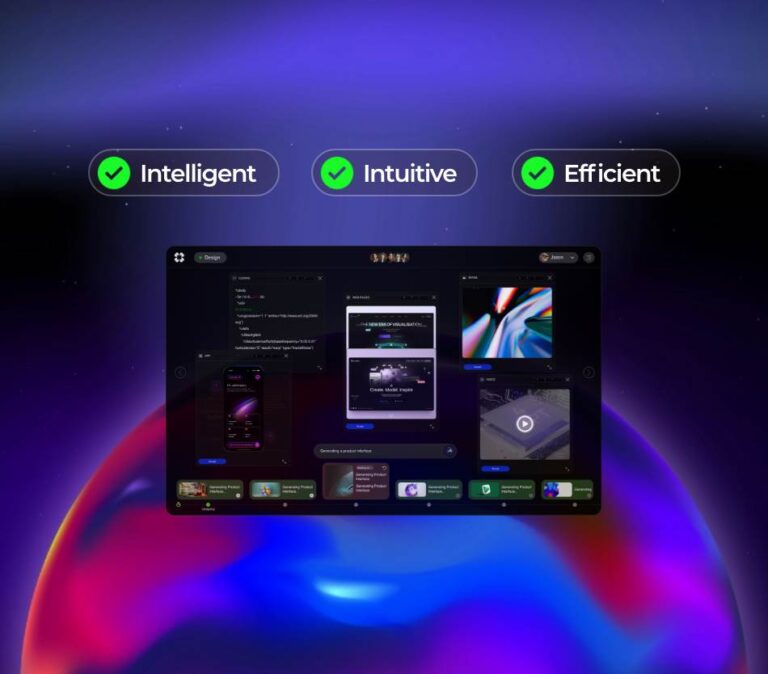
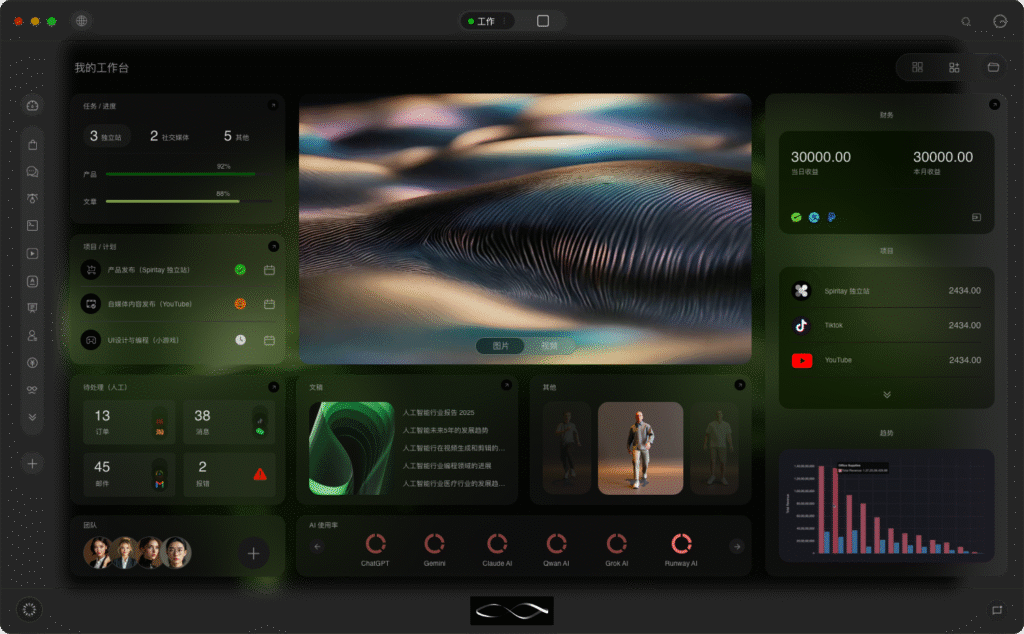
Think of an AI virtual OS as an operating layer that sits between people, data, and services. It coordinates tasks, routes context, executes models, and manages state so humans and systems can operate at higher speed and lower friction. Instead of treating machine learning models and automation scripts as isolated components, the AI virtual OS acts like an intelligent control plane: it schedules work, adapts behavior to context, and exposes consistent APIs to users and applications.
Imagine a customer support scenario. A user sends a message that requires retrieval of account history, a billing check, and a policy lookup. An AI virtual OS can orchestrate these steps: call an intent classifier, fetch records, summarize a policy passage with a retrieval-augmented model, and compose a response — while tracking audit logs, retry semantics, and SLA constraints. For non-technical stakeholders this means faster resolution times and fewer hand-offs; for engineers it means a repeatable platform rather than brittle point-to-point scripts.
Core capabilities to expect
- Task orchestration with conditional logic and adaptive retries.
- Model management: routing requests to the right model, managing versions and fallbacks.
- Context and memory: short-term and long-term context stores for coherent interactions.
- Event-driven integration: triggers from webhooks, message queues, or pub/sub systems.
- Observability: tracing, metrics, and audit trails for human and machine actions.
- Policy and governance enforcement for data access, privacy, and regulatory rules.
For beginners — a simple narrative
Picture an assistant that bundles the functions of email filters, macros, and a knowledgeable coworker. You ask it to prepare a quarterly report. It gathers figures from databases, summarizes important emails, flags compliance issues, and hands you a draft. You refine the draft, and the assistant learns preferences. That is essentially an AI virtual OS at work: coordinating data sources, applying ML models for summarization and classification, and ensuring actions respect company rules.
Architectural anatomy for developers
At the center of a robust AI virtual OS are several layered components. Below is an architectural breakdown and key design choices.
1. Ingestion and event layer
Events come from APIs, webhooks, message brokers, or user interfaces. Design choices here determine latency and coupling. For low-latency interactive flows, use HTTP or gRPC with a short timeout budget. For resilient, long-running jobs, prefer event-driven queues (Kafka, Pub/Sub, or RabbitMQ) and asynchronous worker pools.
2. Orchestration and control plane
This is where workflows get defined and executed: orchestrators such as Temporal, Argo Workflows, or lightweight state machines. Consider whether you need a managed orchestration service or a self-hosted system. Managed services reduce operational overhead but can increase vendor lock-in; self-hosted systems require more DevOps but offer complete control over data locality and cost models.
3. Model serving and inference layer
Model serving can range from calling external APIs to hosting models using Triton, Seldon Core, or BentoML. Key trade-offs include latency, control, cost, and traceability. Hybrid approaches — small models at the edge and larger models in the cloud — often balance cost and responsiveness.
4. Retrieval and knowledge layer
Vector stores, semantic search, and toolkits like Haystack or Elastic with dense vector support power retrieval. The AIOS adaptive search engine pattern emerges where search adapts to user intent, context, and historical responses, improving relevance over time.
5. State, memory, and persistence
Decide between ephemeral context stores for single-session interactions and durable memory stores for long-term personalization. Databases, Redis, or specialized memory services are choices to weigh based on access patterns and privacy requirements.
6. Policy, governance, and security
A policy engine enforces data access, PII masking, and regulatory rules. Implement model cards, data lineage, and consent checks. The EU AI Act and privacy regulations like GDPR influence architecture choices; hosting sensitive inference and storing logs responsibly is critical.
Integration and API design patterns
APIs should expose both synchronous and asynchronous endpoints. Synchronous APIs are useful for human-facing interactions with tight latency budgets. For workflow-heavy automation, design APIs that return job handles and support status polling or callbacks. Use rich event metadata so downstream systems can make routing decisions without heavy coupling.
Consider a composable API design where small, single-purpose endpoints are combined into larger workflows by the orchestration layer. This favors reuse and testability over monolithic endpoints that encapsulate entire processes.
Implementation playbook for teams
Below is a practical, prose-based step-by-step playbook for adopting an AI virtual OS approach.
- Start with a single use case that has clear KPIs: time saved, cost reduction, or conversion uplift. Examples: automated invoice triage, account onboarding, or support triage.
- Inventory integrations and data sources. Map which systems provide authoritative data and which require transformation.
- Choose an orchestration primitive that fits needs: stateful workflow engine for long-lived processes or task queue for short jobs.
- Define model routing and fallbacks. Small models for intent detection, larger ones for generation. Always include deterministic fallbacks for reliability.
- Instrument observability from day one. Capture traces across the orchestration, model calls, and external services. Use OpenTelemetry-compatible tools for portability.
- Run a privacy and risk review. Classify data, establish retention policies, and require explicit consent where needed.
- Iterate with real users and measure operational signals: latency, throughput, success rates, and human override frequency.
Deployment and scaling considerations
Scaling an AI virtual OS involves multiple dimensions: model inference throughput, orchestration concurrency, storage IO, and networking. Practical tips:
- Autoscale workers based on queue depth and model latency percentiles. Use burstable resources for unpredictable loads.
- Cache model results for repeated queries to reduce cost and latency for read-heavy workloads.
- Partition work by tenant or functionality to limit blast radius when a model or downstream system fails.
- Monitor tail latency and p99/p95 for model calls; these often dictate user experience more than averages.
Observability, metrics, and failure modes
Track signals across three layers: orchestration (workflow duration, retry rates), models (inference latency, error rates, token counts if relevant), and downstream systems (API errors, DB latency). Important metrics include overall request-to-response time, percent of requests served by the primary model vs fallback, and human intervention rate. Failure modes to prepare for include noisy model outputs, hallucinations, and partial failures where some downstream services succeed and others do not.
Security, privacy, and governance
Enforce least privilege for data access and separate training data from live inference logs when possible. Use tokenization, encryption at rest and in transit, and RBAC for platform controls. Implement audit trails that record which model version made what decision, who approved policy overrides, and how data was transformed.
Vendor landscape and ROI for product leaders
Vendors and open-source projects form two different value propositions. Managed platforms (e.g., cloud AI services, vendor orchestration) accelerate time to value, include SLAs, and reduce operational burden. Open-source stacks (e.g., Temporal, Ray, Kubeflow, Seldon, LangChain frameworks) enable customization, auditability, and lower long-term costs for large-scale deployments.
When evaluating ROI consider these lenses:
- Time to first value: how quickly can the vendor or stack solve the initial use case?
- Operational cost: inference cost per request, platform maintenance, and storage.
- Lock-in risk: data egress costs, proprietary model weights, and migration complexity.
- Compliance: does the vendor support data residency, model explainability, and audit reporting?
For example, a financial firm may accept higher platform costs to ensure data never leaves controlled infrastructure, whereas a consumer app may prioritize managed inference to scale quickly.
Case study snapshot
A mid-market e-commerce company implemented an AI virtual OS to automate returns processing. They used a managed workflow engine for orchestration, a vector store combined with a retrieval model for policy lookup, and a smaller local model for intent detection. Results: 60% reduction in manual touches, a 25% faster processing time, and an initial payback period under six months. Key operational lessons were the need for robust logging to debug edge cases and a human-in-the-loop escalation path to prevent revenue-impacting decisions from being automated prematurely.
Trends, standards, and the future
Recent advancements — such as improvements in long-context models, on-device accelerators, and adoption of standards like OpenTelemetry and model cards — are accelerating AIOS adoption. The idea of an AIOS adaptive search engine is gaining traction: systems that combine semantic search, contextual signals, and model-driven ranking to give more relevant, personalized results over time. Regulatory frameworks like the EU AI Act will increasingly shape how vendors handle high-risk use cases.
Risks and operational pitfalls
Common traps include building monolithic agents that are hard to test, neglecting cost controls on model use, and failing to instrument end-to-end observability. Another frequent mistake is treating models as single-point solutions rather than components in a resilient system that needs fallback rules and human oversight.
Choosing between patterns
Compare a few typical choices:

- Managed orchestration vs self-hosted: pick managed if speed and low ops are priorities; pick self-hosted if control and compliance matter more.
- Synchronous vs event-driven: synchronous for interactive, event-driven for long-running or batch processes.
- Monolithic agent vs modular pipeline: modular pipelines are easier to test and scale; monolithic agents may simplify early proofs-of-concept.
Practical adoption advice
Start small, measure impact, and instrument everything. Build a governance checklist and include security in design reviews. Evaluate both the platform and the ecosystem — tools that integrate with OpenTelemetry, vector stores, and orchestration engines reduce integration time.
Key Takeaways
AI virtual OS architectures move organizations from isolated models and scripts to an intelligent control plane that coordinates models, data, and business rules. For developers this means designing for observability, retries, and distributed state. For product leaders it requires clear ROI targets, a pragmatic vendor strategy, and governance around data and model use. Emerging concepts like the AIOS adaptive search engine and tighter integration with AI-driven DevOps tools will shape the next wave of platforms, but the fundamentals remain the same: start with a clear use case, instrument behavior, and plan for safe automation at scale.